



















Engineering Micro Storage: How DC-DC Optimization and Aerosol Suppression Redefine System Lifecycles
April 07, 2026



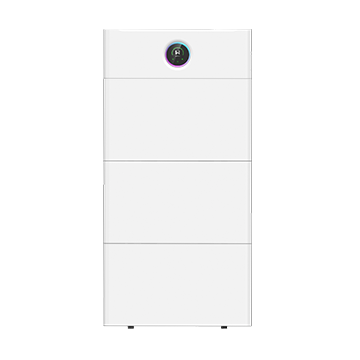
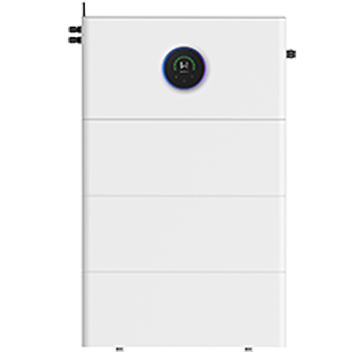
The transition toward decentralized energy requires residential micro storage units to operate with industrial grade reliability. In evaluating systems like the GoodWe ESA-Athena, two specific engineering choices stand out for addressing the core challenges of capacity degradation and compact safety: module-level DC-DC integration and built-in aerosol fire suppression.
Why Do Traditional Multi-Module Energy Storage Systems Face Capacity Bottlenecks?
A standard limitation in multi-module battery energy storage systems is the capacity bottleneck. When expanding a system, combining new battery packs with older, degraded units traditionally triggers a mismatch. Due to varying internal resistance and State of Health (SOH), the older cells dictate the overall output, leading to current circulation and accelerated aging.
How Does Module-Level DC-DC Integration Solve the Dilemma of Mixed Battery Expansion?
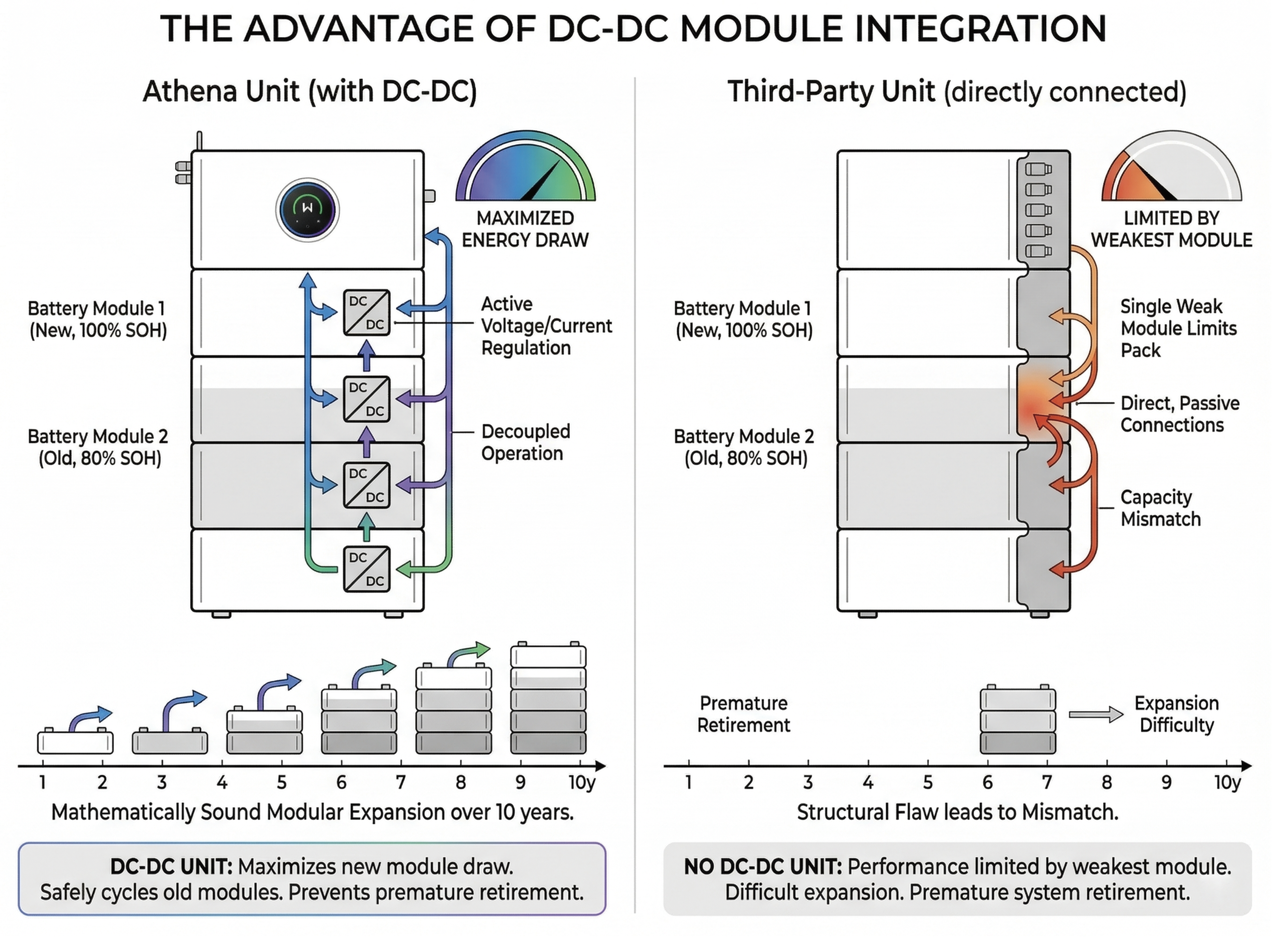
The integration of a dedicated DC-DC converter at the battery module level resolves this structural flaw. By decoupling the packs, the DC-DC module actively regulates the voltage and current output of each unit independently. The system draws maximum available energy from the new cells while safely cycling the older cells within their reduced parameters. This architecture prevents premature system retirement and provides a mathematically sound path for modular expansion over a 10-year lifecycle.
Why Are Traditional Fire Suppression Solutions Incompatible with Compact Micro Storage?
Fire suppression engineering always involves balancing cost against physical constraints. In utility-scale or industrial energy storage, traditional water or gas-based systems remain highly effective and are economically optimized for managing large volumes. However, as energy storage decentralizes into the residential sector, the application scenario fundamentally shifts. For a consumer-facing micro storage unit like the Athena, minimizing the overall physical footprint and simplifying the installation process take precedence over the economies of scale seen in industrial setups. Adapting conventional pressurized gas cylinders or complex manifold piping to a compact home unit introduces significant spatial challenges. Furthermore, these standard systems often require strict environmental sealing or carry maintenance prerequisites that are difficult to guarantee in a standard residential setting. Therefore, managing thermal risks in these compact environments requires a tailored approach—one that prioritizes volumetric efficiency and unobtrusive integration over traditional cost-optimization models.Safety in compact environments requires a shift from traditional suppression methods. Water or standard gas-based systems demand significant volume and complex plumbing.
How Does Aerosol Fire Suppression Balance Space and Safety Demands for Micro Storage?
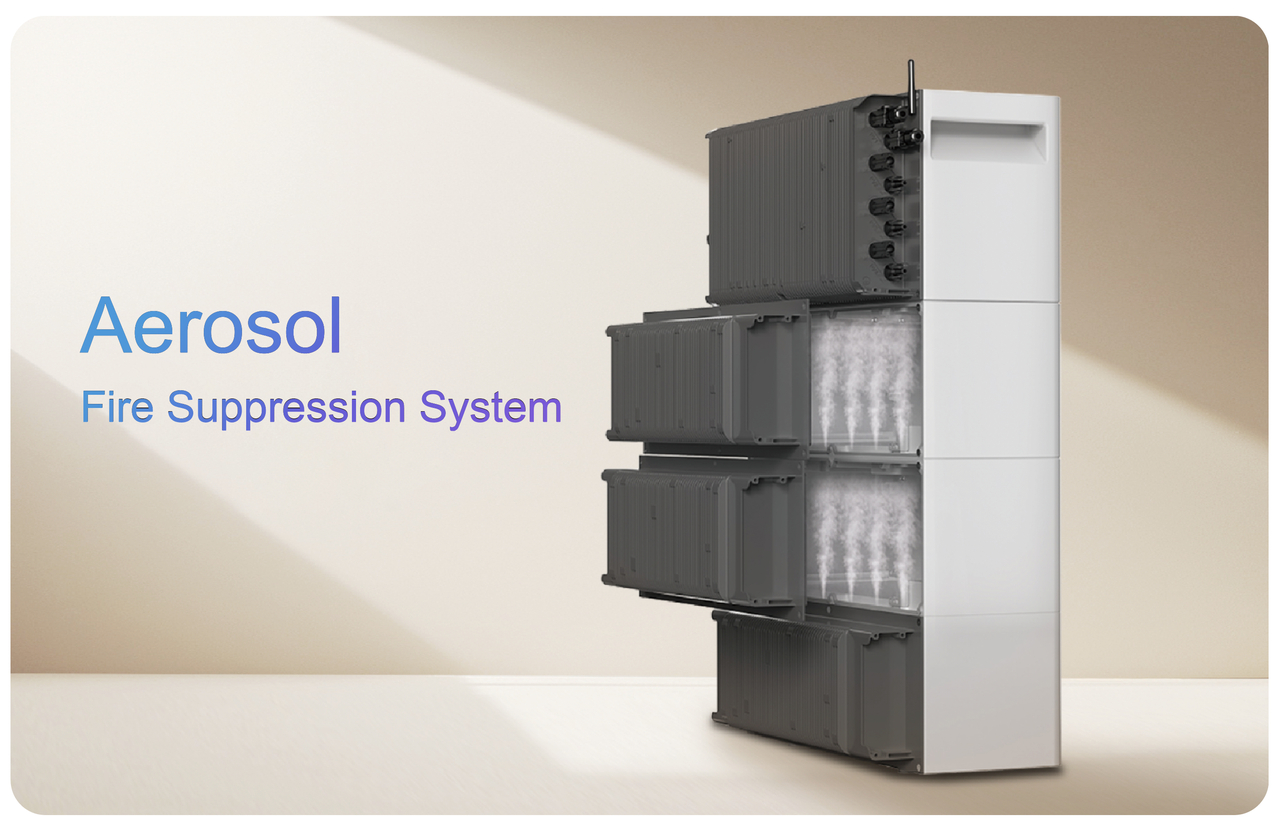
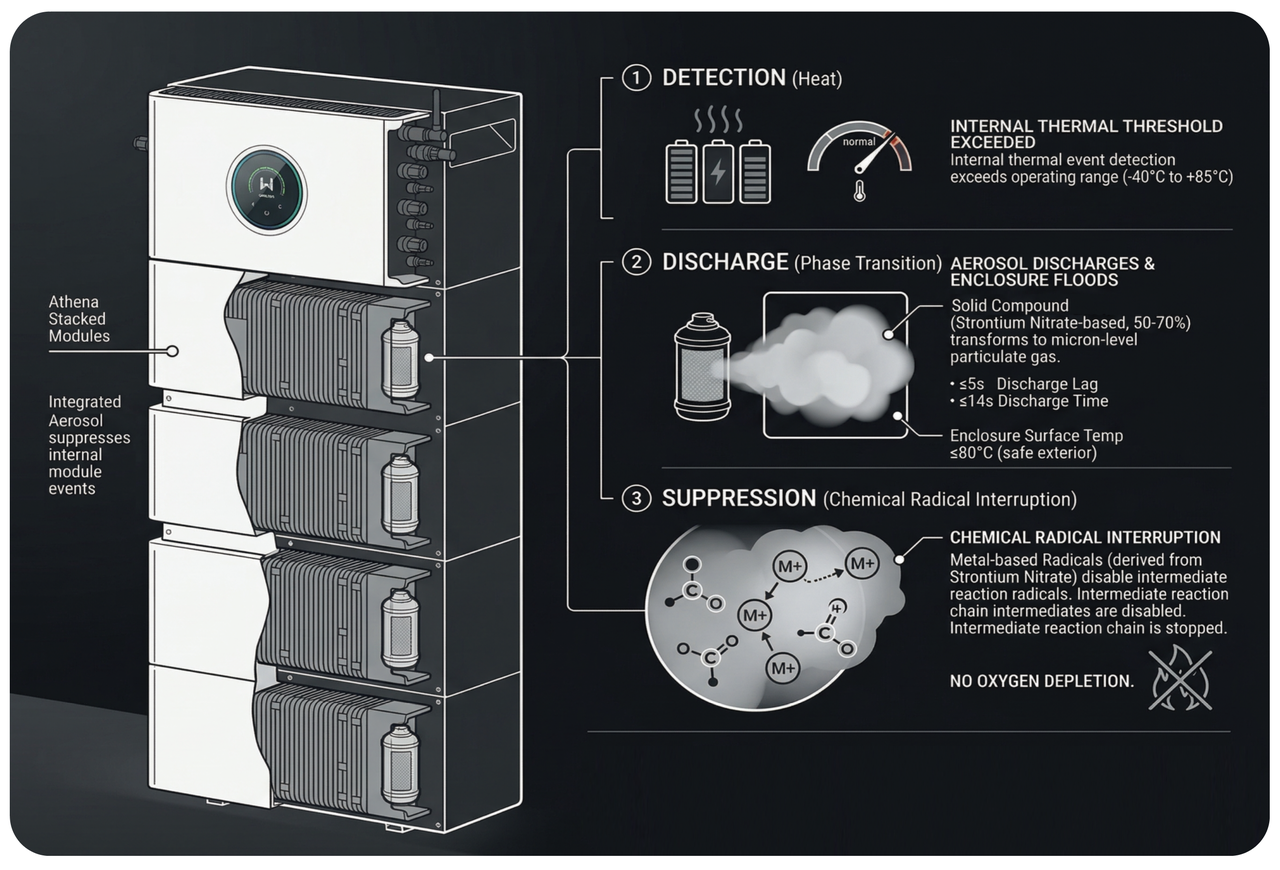
Aerosol fire suppression operates entirely differently. When a critical thermal threshold is reached, the solid compound undergoes a rapid phase transition, flooding the enclosure with a micron-level particulate gas. Rather than merely suffocating the fire, the potassium-based radicals physically interrupt the chemical chain reaction of combustion. For a micro storage unit, this delivers maximum volumetric efficiency and high reliability, containing potential thermal events at the enclosure level without oxygen depletion.
How Do These Two Technical Upgrades Reduce Full-Lifecycle O&M and Usage Costs?
Beyond the internal architecture, these engineering choices alter the operational and maintenance landscape. Traditional storage systems require strict environmental controls and extensive site preparation, limiting their deployment in space-constrained urban areas or challenging climates. By utilizing aerosol suppression, the physical footprint is minimized, allowing for flexible installations without compromising safety protocols. Furthermore, the module-level optimization drastically reduces the frequency of on-site maintenance visits, as system performance is no longer hostage to the weakest cell. This translates to a significantly lower Levelized Cost of Storage (LCOS) for end-users and project developers.
How Will Micro Storage Transition From Backup Power to Core Grid Assets?
Looking ahead, the role of micro storage is shifting from passive backup to active grid participation. When a system can reliably expand its capacity without facing integration penalties, it becomes a scalable asset for future energy networks. The focus moves from merely storing electrons to building an adaptable, decentralized power infrastructure that maintains its technical integrity over a decade of evolving grid demands.


