










How Should Galaxy PV Systems Be Installed, Commissioned and Maintained for Long-Term Safety?
November 13, 2026


A safe and reliable Galaxy rooftop PV array depends on more than its initial design. Proper installation, commissioning, inspection, and maintenance are essential to ensuring that the completed system performs as intended throughout its service life.
For EPCs and solar installers working with Galaxy G4 frameless bonded and G5 framed clamped applications, the priority is to verify that every installation detail meets the approved design, identify potential defects before energisation, and establish a maintenance process that detects changes and ensures corrective actions are completed.
This guide outlines practical installation, commissioning, and maintenance controls for rooftop PV projects in Australia, the European Union, and Southeast Asia.
What Can the Los Angeles Warehouse Fire Teach Us About PV Installation and Maintenance?
The LAFD's investigation into the June 2026 warehouse fire in Boyle Heights identified a rooftop origin and an electrical event but retained an undetermined cause classification.
The report could not rule out the solar system, associated equipment, or maintenance activities as possible contributing factors. However, it did not establish a specific maintenance error as the cause.
The practical takeaway is clear: installation activities, defect resolution, inspection records, and authorisation to energise should all be properly documented and traceable.
What Should Installers Check Before Electrical Connections Become Concealed?
During receiving inspection, record each module's model and serial number. Check the glass, backsheet, junction box, cables, and connectors for visible damage. Quarantine any damaged components and confirm that extension leads and field-installed connectors match the approved bill of materials.
A connector that physically fits is not necessarily an approved mating connector.
Protect unmated connectors from moisture and contamination using suitable protective caps. Assemble field terminations using the cable, contacts, and tools specified by the connector manufacturer. Verify the seals, contact insertion, locking mechanism, and strain relief.
Record the installer and connection location so that any workmanship defect can be traced to other potentially affected connections. Never disconnect DC connectors under load.
For Galaxy G4 bonding applications, document surface preparation, adhesive batch number and expiry date, application conditions, approved bonding geometry, curing process, and required adhesion checks. Photograph the rear cable routing before positioning the module.
For Galaxy G5 clamping applications, document the specified hardware, clamp positions, and tightening checks. Verify that cables are not trapped beneath the module frame or mounting hardware.
Keep the installation instructions for the exact Galaxy model available at the work area.
How Can Commissioning Verify That a Galaxy PV System Is Ready for Operation?
Use an inspection and test plan with defined acceptance criteria and a named person responsible for release. IEC 62446-1 covers commissioning, inspection and handover documentation. Qualified personnel should select the applicable tests, instruments and safe test sequence for the installed circuit.
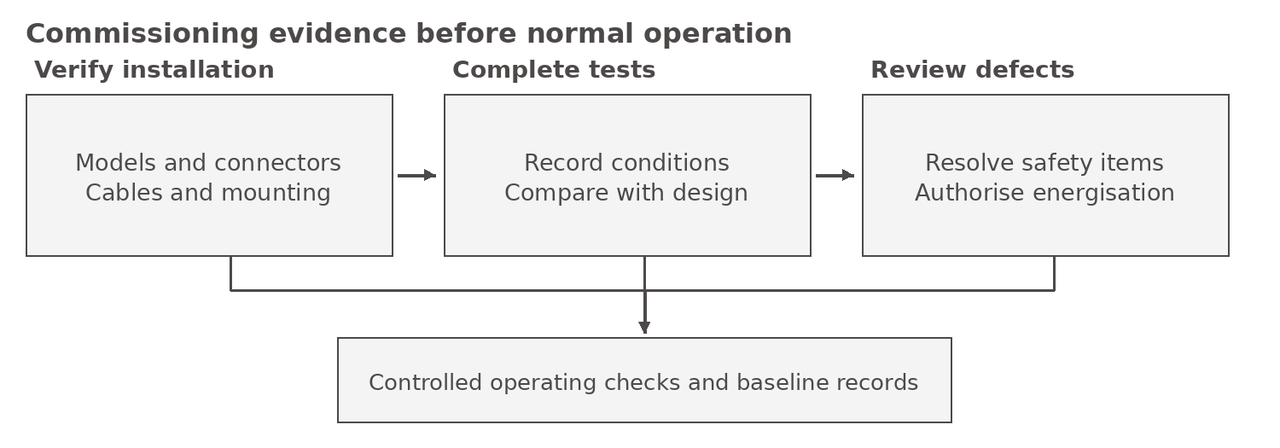
Figure 1. Evidence needed for release.
Energised tests require a separate controlled test authorisation. A failed safety item returns to correction and retesting before normal operation.
Check polarity, protective bonding where required, string voltage and consistency with the design, insulation, switching and protective functions. Record the test configuration and conditions. Disconnect or protect sensitive equipment as required by its instructions before insulation testing. Do not copy a single resistance threshold or test voltage across different systems.
Confirm that the inverter configuration matches the array and local requirements. Where arc-fault protection is fitted, verify its availability and settings for that exact model; test only by the manufacturer’s approved method. Never create a deliberate arc to demonstrate protection.
Set up a baseline under suitable operating conditions: string or inverter performance, alarm history, photographs and any specified thermal survey. Complete the handover with an accurate array map, shutdown instructions, connector schedule, test records and emergency contacts. Locate critical information where the operator and responders can find it, subject to local requirements.
How Should Galaxy Rooftop PV Systems Be Inspected and Maintained?
Plan inspections according to the applicable Galaxy installation and maintenance manual, local regulations, insurer requirements, and actual site exposure.
The available Galaxy O&M document includes inspections at commissioning and during subsequent follow-up periods, periodic visual checks, annual testing, and additional inspections following extreme weather events. However, its applicability to current products and installation configurations must be confirmed. In particular, do not automatically transfer the inspection schedule in this earlier document to G5 applications.
Routine inspections should cover cable support, connectors, junction boxes, mounting hardware, roof drainage, debris accumulation, and shading.
Specific checks should include:
Galaxy G4 bonded applications: Look for signs of bond separation, movement, or other changes at the bonding interface.
Galaxy G5 clamped applications: Check for displaced clamps, loose fixings, and damaged electrical bonding connections, where fitted.
Follow the specified inspection procedure rather than routinely retightening every fastener. Refer damaged factory-installed cables or junction boxes to GoodWe's approved service process.
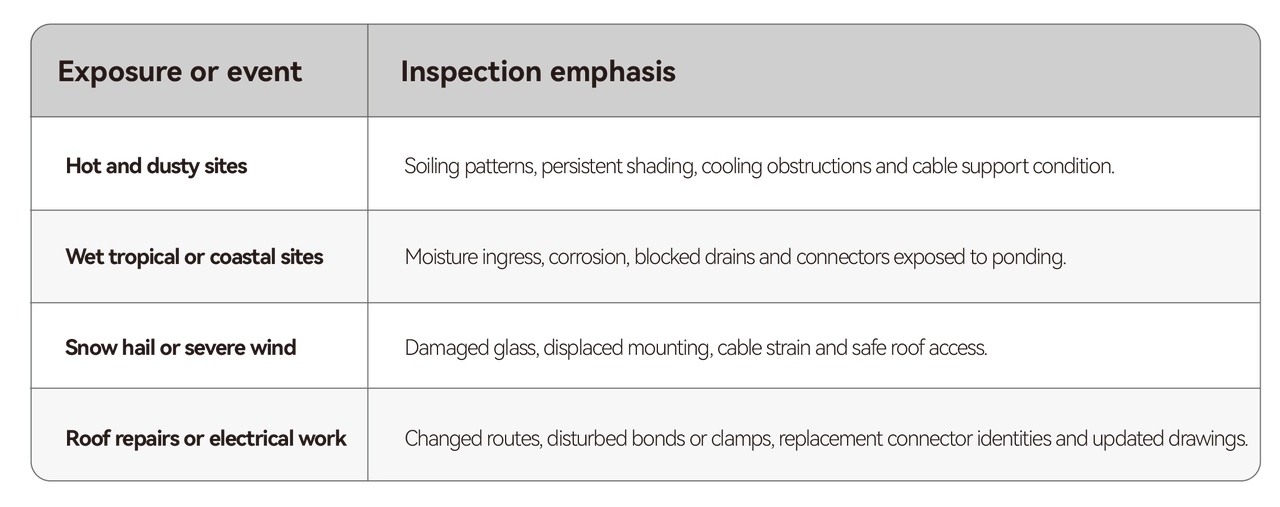
These are exposure-led priorities, not exclusive regional conditions. Choose them for the actual site, whether in Australia, Europe or Southeast Asia. Coordinate roof access and permits with the building operator; fragile roofs and damaged arrays need specific access controls.
How Can Thermal Imaging Help Identify Rooftop PV Faults?
Thermal imaging can help locate abnormal temperature patterns, but an infrared image alone cannot establish the underlying cause of an anomaly.
For meaningful analysis, record irradiance, wind conditions, electrical load, viewing conditions, and equipment identification. Compare components under similar operating conditions to make the results more reliable.
IEC TS 62446-3 addresses the equipment, operating conditions, inspection procedures, and reporting requirements for outdoor infrared thermography of PV systems.
A thermal image captured under low-load conditions cannot, by itself, confirm that a suspected connection is safe. Likewise, a single temperature-difference threshold should not be treated as a universal pass/fail criterion.
How Should PV Faults Be Resolved Before a Galaxy System Returns to Service?
Repeated insulation or arc-fault alarms, discolouration, melting, burning odour and unexpected string behaviour need assessment. Do not repeatedly reset a protective trip to recover generation. Assign an owner, identify the affected circuit and keep alarm history. IEC 62446-2 provides a framework for preventive and corrective maintenance.
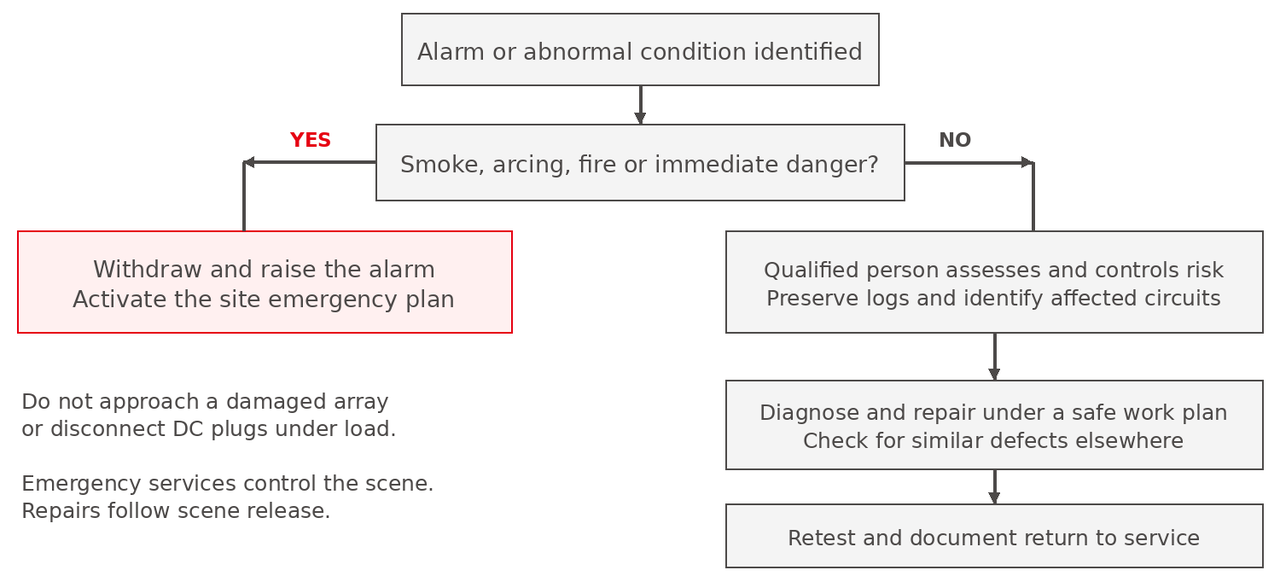
Figure 2. Fault response and return to service.
Switching is performed only when safe by authorised personnel under the site procedure. PV DC sections may remain live in light after AC isolation.
After completing a repair, investigate whether the same component batch, tools, installation method, or environmental exposure could have affected other circuits.
The repair record should clearly document:
The identified fault and affected circuit.
The corrective action taken.
The inspection and test results after repair.
The person authorises the system's return to service.
Update the array layout drawings and maintenance history so that future technicians can identify what was changed and understand the system's service history.
What Should Be Included in a Galaxy Installer Handover Checklist?
Before handing over the completed system, confirm that:
Approved module models, connector pairings, and mounting records are complete.Identified safety defects have been resolved and commissioning results accepted.Monitoring alerts have an assigned owner and a defined response process.The system owner has access to operating, inspection, and emergency instructions.
GoodWe's product support, EPC installation workmanship, and owner maintenance all rely on accurate and accessible records. Clear responsibilities, traceable installation practices, and verified corrective actions help maintain the intended safety of both bonded and clamped Galaxy arrays throughout their service life.
*Technical scope: guidance for qualified personnel, not an electrical work procedure or fire-response instruction. Apply current product documents, local requirements and the site emergency plan.


