













How Galaxy Modules Help Reduce Roof-Leakage Risk in Southeast Asia
September 15, 2026


For a rooftop solar project, energy yield is only part of the success story. The roof must also continue doing its original job: keeping the building dry.
That requirement is especially important in Southeast Asia. The region is shaped by monsoons, high humidity and periods of intense rainfall. The Philippines also combines abundant rain with significant tropical-cyclone exposure, while Malaysia experiences high humidity and copious rainfall, including heavy monsoon spells in exposed areas. Recent regional climate reporting has also highlighted exceptional monsoon and tropical-cyclone rainfall affecting countries such as Vietnam. These conditions do not make rooftop solar unsafe, but they make roof-interface design and installation quality particularly important.
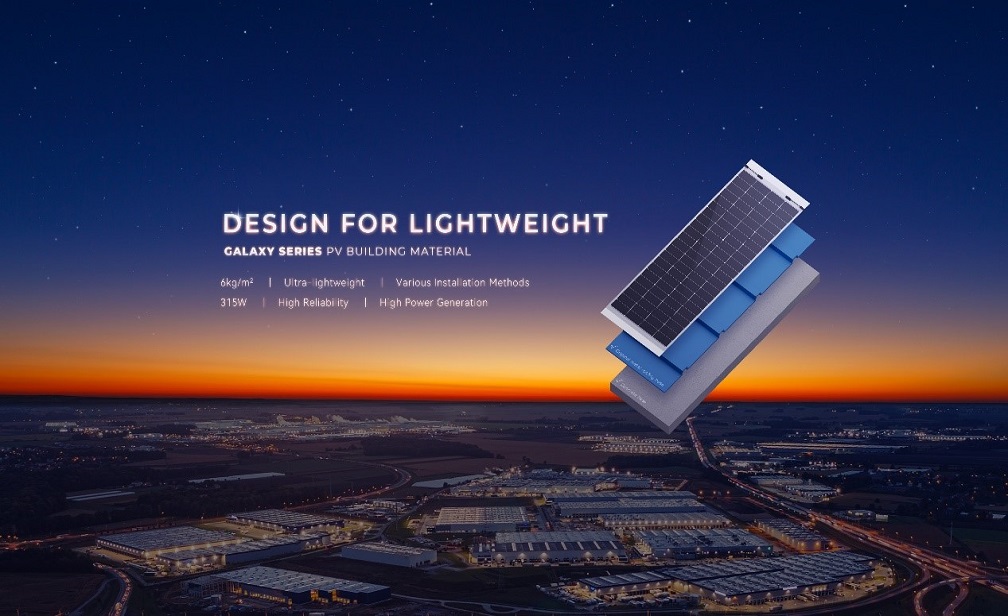
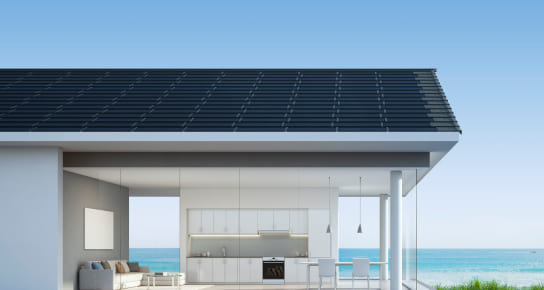
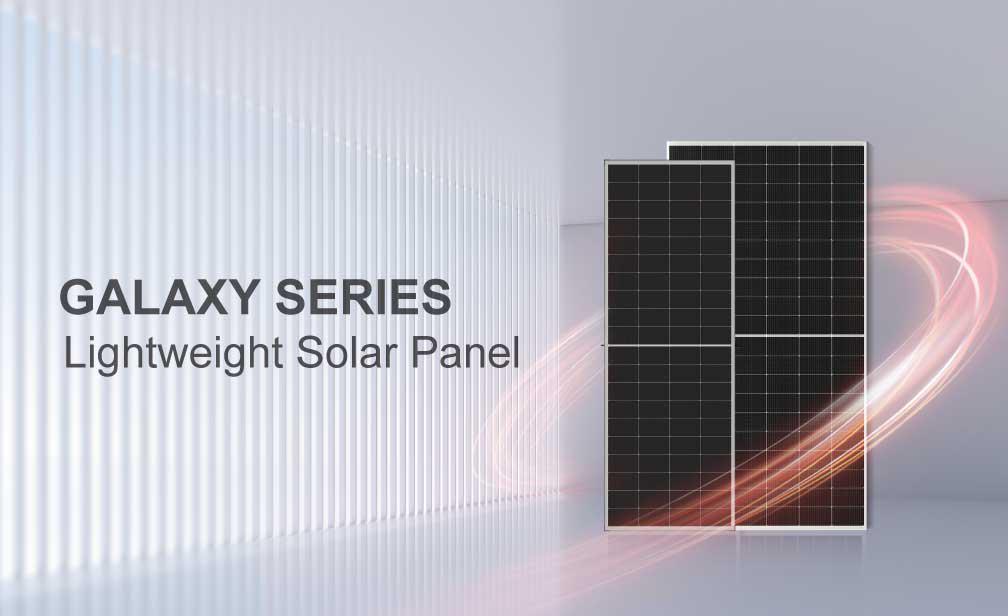
GoodWe Galaxy is a lightweight solar-module family for industrial and commercial roofs. Depending on the exact Galaxy model, roof profile and approved project solution, installation may use structural bonding or compatible profile-matched clamps without drilling new holes through the roof sheet. By avoiding unnecessary roof penetrations, these Galaxy solutions can remove one common route by which water may enter a building.
The important word is reduce. Galaxy does not repair an existing roof, replace the roof's waterproofing system or eliminate every possible cause of leakage. The best result comes from combining a suitable penetration-free interface with disciplined EPC engineering, installation records and long-term maintenance.
Why Should Roof-Leakage Risk Be Considered at the Design Stage?
A conventional penetrative rooftop mounting system can be made watertight when it is properly engineered, flashed, sealed and maintained. However, every new hole through a roof sheet or waterproofing layer creates another interface that must remain sealed while the building experiences wind, vibration, thermal movement, corrosion and ageing.
Leakage risk may come from several sources:
new fastener penetrations that are incorrectly located, sealed or tightened;
existing corrosion, loose seams, failed sealant or damaged membranes;
blocked gutters, valleys or drainage outlets;
wind-driven rain entering an existing weak detail;
incompatible materials or poor surface preparation;
cable routes or equipment that trap water against the roof;
later maintenance work that damages the roof or mounting interface.
A penetration-free installation removes the first item from the list, but the other controls still matter. For an EPC, this is best understood as risk reduction through fewer waterproofing interfaces, not as a universal "no-leak" guarantee.
Which Galaxy Installation Approaches Can Avoid New Roof Penetrations?
Not every Galaxy model uses the same installation method, and not every method is suitable for every roof. The exact module, accessory, roof profile and current installation document must be confirmed for each project.
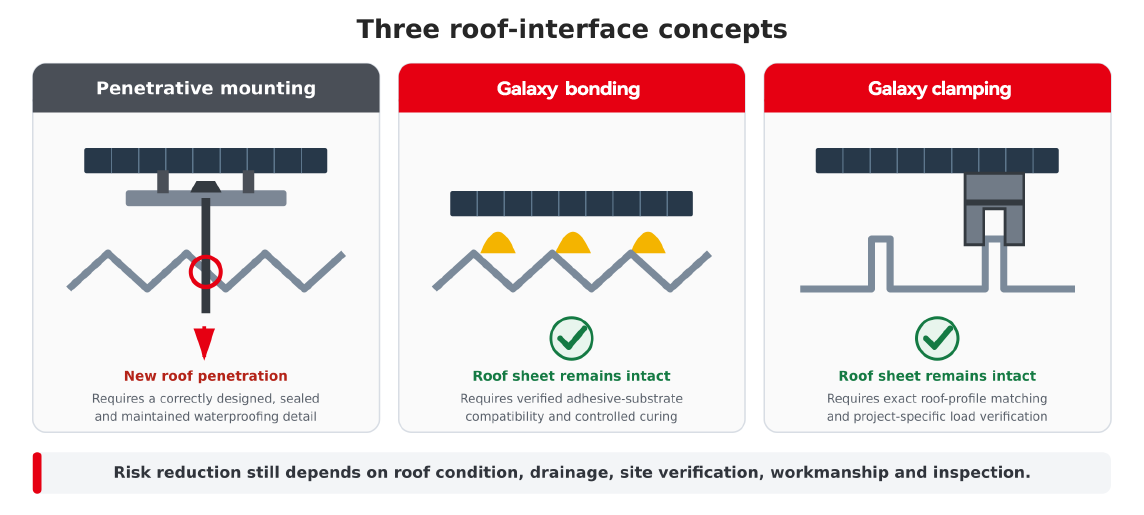
Figure 1. Conceptual roof-interface comparison. Exact details are model-, roof- and project-specific.
1. Structural bonding on a compatible surface
For suitable metal-roof applications, Galaxy can be bonded to the roof profile using an approved structural adhesive arrangement. For some flat-roof concepts, approved support tubes may be bonded to the roof and the module bonded to those supports. Because the load is transferred through the bonded interface, no screw needs to pass through the roof skin in the supported penetration-free concept.
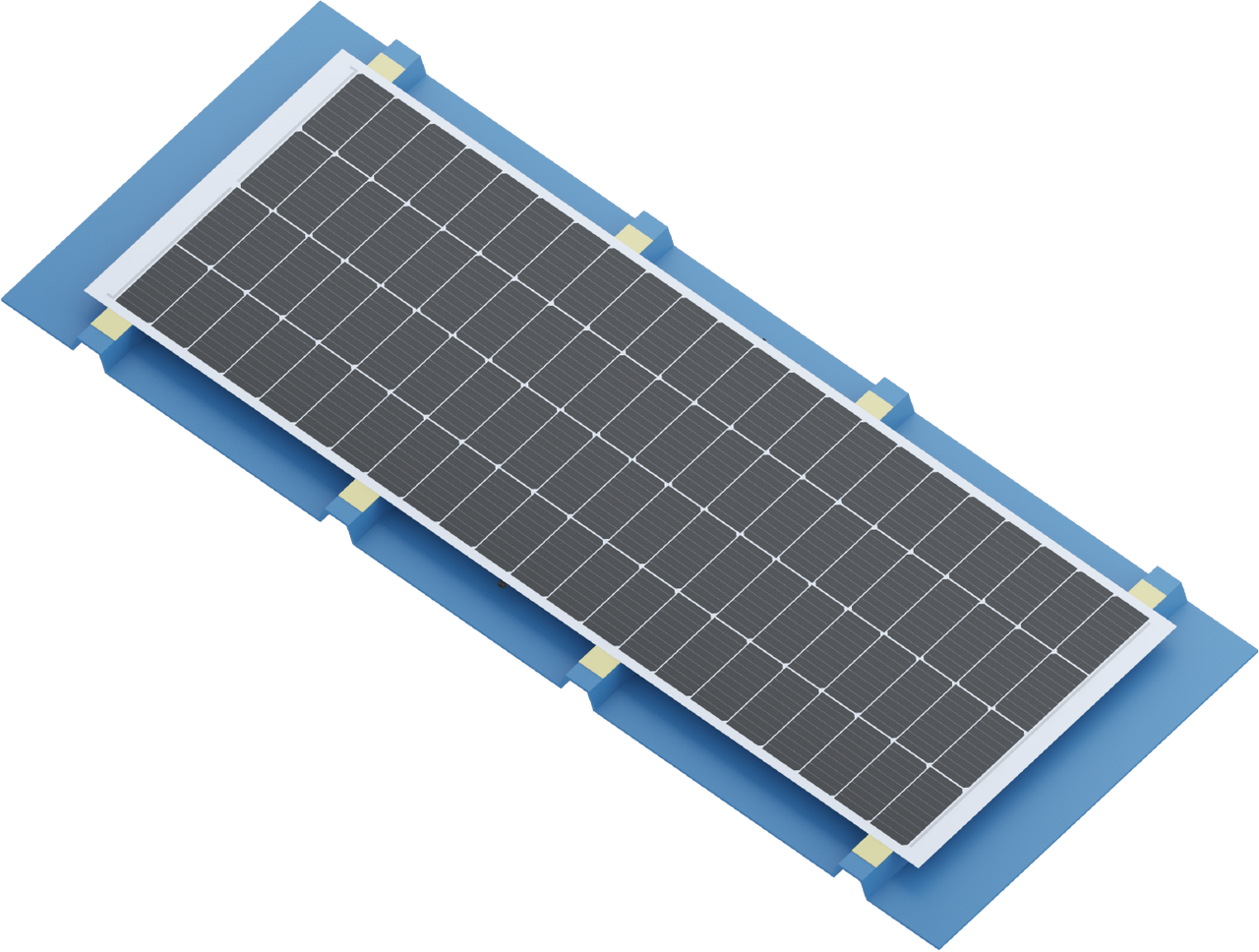
Figure 2. Adhesive-Bonding Installation
This removes new drilling points, but it makes the adhesive-to-substrate interface safety-critical. The EPC must verify the complete material combination: the exact roof sheet or membrane, its coating, its age and condition, the cleaner or primer, the adhesive, the support material and the Galaxy interface. A generic statement such as "adhesive works on metal" is not enough.
Reliable bonding also depends on installation conditions. The current Galaxy guidance requires a clean, dry and uncontaminated surface, suitable site weather and compliance with the adhesive manufacturer's application and curing instructions. Work should not proceed in rain or strong winds. Temperature, relative humidity, adhesive batch information, surface preparation and curing time should be recorded as project quality evidence.
2. Profile-matched clamps on compatible metal roofs
For compatible raised-seam and profiled metal roofs, Galaxy Plus solutions may use clamps that grip the roof profile without drilling through the roof sheet. Bolts tighten the clamp assembly and secure the module, while the original roof skin remains unperforated.
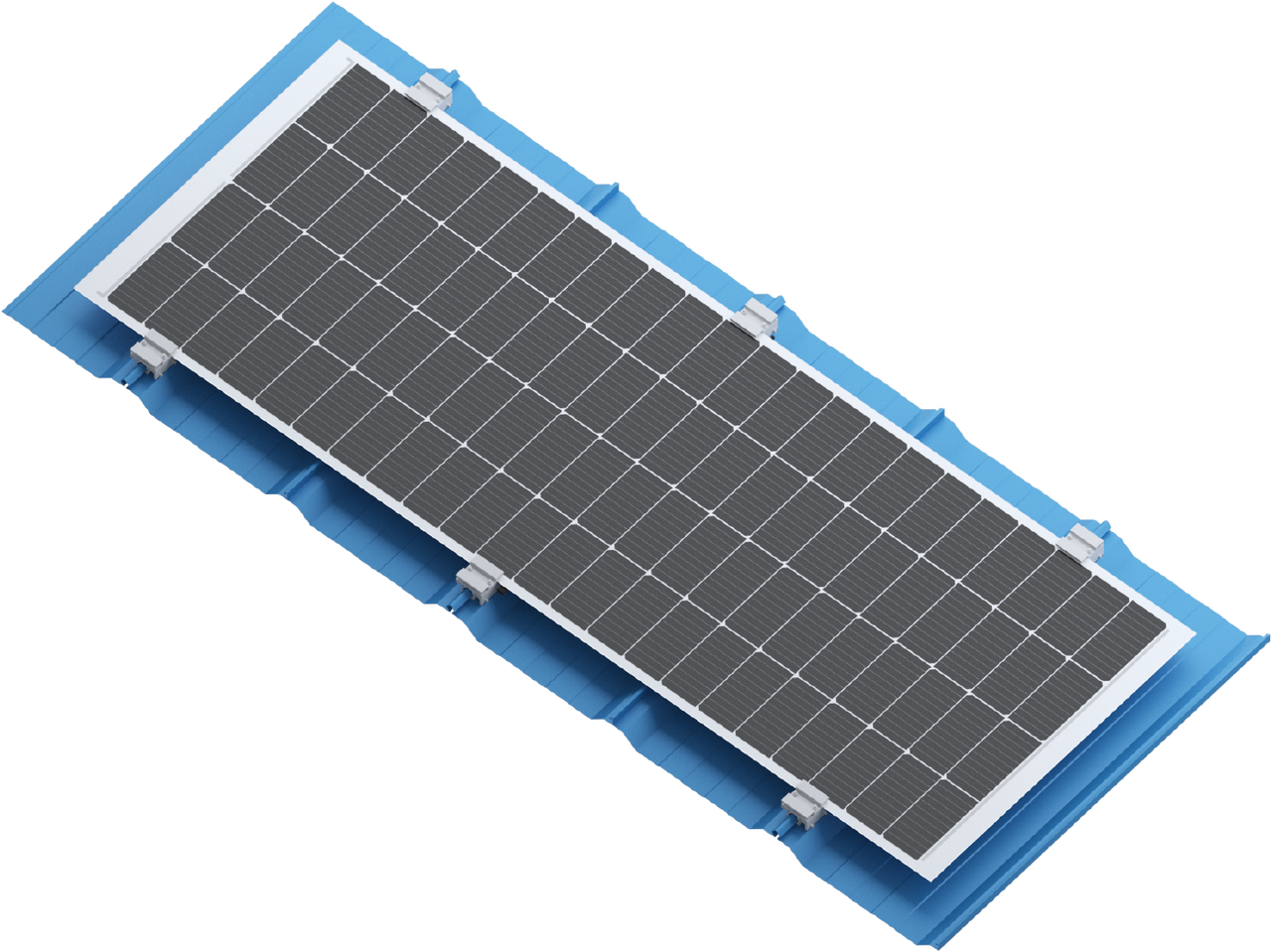
Figure 3. Clamp Installation
This approach can reduce waterproofing disturbance and may also simplify later module removal. However, "clamp" does not automatically mean "compatible." The clamp geometry must match the exact roof profile, and the roof sheet, seam and supporting structure must be able to transfer the project wind and other design actions. The EPC should verify roof-sheet thickness and material, coating condition, seam geometry, purlin or support arrangement, clamp position, specified tightening method, corrosion compatibility and the required project tests.
What Penetration‑Free Does — and Does Not — Mean
Penetration-free Galaxy installation can help in three practical ways:
It avoids new holes in the supported roof area. This removes the need to keep additional PV fastener penetrations watertight over the system life.
It reduces disturbance to the existing roof assembly. There is less cutting or drilling around which coating damage, swarf or poorly applied sealant could create future problems.
It can support a cleaner maintenance strategy. With a documented bonding or clamping interface, the EPC can inspect defined attachment points and preserve the roof's existing water path.
It does not mean that:
an old, corroded or leaking roof becomes suitable without repair;
any adhesive or clamp may be used on any roof;
drainage routes may be covered or narrowed;
structural and wind-uplift verification is unnecessary;
the existing roof supplier's warranty automatically remains valid;
leakage caused by unrelated roof defects becomes a module-manufacturer responsibility.
What Can EPCs Do to Reduce Roof-Leakage Risk During Installation?
1. Start with roof readiness, not module layout
Survey the roof before finalizing the PV design. Record existing leaks, repairs, corrosion, coating damage, loose seams, ponding, blocked drains, roof penetrations and fragile areas. Confirm the roof type, manufacturer or profile, material, thickness, slope, age, support spacing and warranty status. Existing defects should be repaired and accepted by the responsible roofing party before PV work begins.
2. Select the exact Galaxy interface for the exact roof
Use the current, market-applicable datasheet and installation manual for the proposed Galaxy model. Confirm whether the approved concept is direct bonding, bonding through support tubes, profile-matched clamping or another documented method. Do not transfer dimensions, clamp spacing, adhesive details or load ratings from a different Galaxy model or an earlier project.
3. Preserve the roof's water-management system
Keep valleys, gutters, drains, overflow paths, laps and movement joints clear. The array layout should allow water and debris to leave the roof and should provide safe access for inspection and cleaning. Cables and connectors should be supported above areas where water can collect and should not be left lying in drainage paths.
4. Verify the full load path
Penetration-free does not mean load-free. Wind uplift still travels from the module through the adhesive or clamp, into the roof sheet, seam, fasteners, purlins and building structure. The responsible engineer must verify the project-specific load path and design actions. This is particularly important in typhoon-exposed areas such as the Philippines and Viet Nam, and for roof edges and corners where wind effects may be higher.
5. Test the real project interface
For bonded solutions, conduct representative on-site adhesion testing using the intended roof surface, preparation method, primer or cleaner, adhesive, support material and curing conditions. Choose locations that represent the main roof conditions while avoiding drains, damaged areas and unsafe access zones. The project engineer should set the test quantity and acceptance criteria from the project design basis; a single universal pull-force value should not be assumed.
For clamped solutions, complete any project-required profile, clamp or seam-load verification and confirm the specified installation torque or tightening procedure. Photograph the setup and retain calibrated test records.
6. Make workmanship traceable
Use an inspection and test plan with hold points before the interface becomes difficult to inspect. Record roof condition, surface preparation, weather, adhesive batch and expiry, application time, curing time, clamp type, tightening checks, installer, array area and photographs. A small trial area or mock-up is often a sensible first step before full production installation.
7. Inspect after commissioning and after severe weather
GoodWe's Galaxy O&M guidance recommends a full inspection at commissioning, another after the first month, regular annual inspection, monthly visual checks and additional inspections around extreme weather. For leakage-risk control, the inspection should cover:
the roof below and around the array for new water staining or moisture;
bonded interfaces for movement, separation or abnormal deformation;
clamps, nuts and bolts for condition and secure fastening;
roof seams, coatings and membranes for damage or corrosion;
gutters, valleys, drains and access routes for blockage;
cables, connectors and junction boxes for water exposure;
the array after typhoons, severe thunderstorms or other exceptional events.
How Should This Approach Be Applied Across Southeast Asia?
Southeast Asia is not one uniform design environment. EPCs should translate the same risk-control logic into local project conditions:
Singapore and Malaysia: High humidity and frequent rainfall make weather-window planning, dry-surface verification and drainage protection essential. In exposed Malaysian regions, monsoon rain spells require especially disciplined sequencing and curing control.
Philippines and Viet Nam: Tropical cyclones and wind-driven rain increase the importance of wind-uplift engineering, edge-zone detailing, calibrated interface tests and post-storm inspections.
Indonesia and Thailand: Seasonal monsoon conditions, intense rain events and varied coastal or industrial exposure make roof condition, corrosion compatibility and unobstructed drainage central to the design.
Coastal and industrial sites throughout the region: Salt, chemicals and persistent moisture can accelerate corrosion or affect coatings. Material compatibility and inspection frequency should reflect the actual exposure category.
The correct solution is therefore project-specific, even when the overall principle - preserving the roof by avoiding unnecessary penetrations - remains the same.
Who Is Responsible for Managing Roof-Leakage Risk?
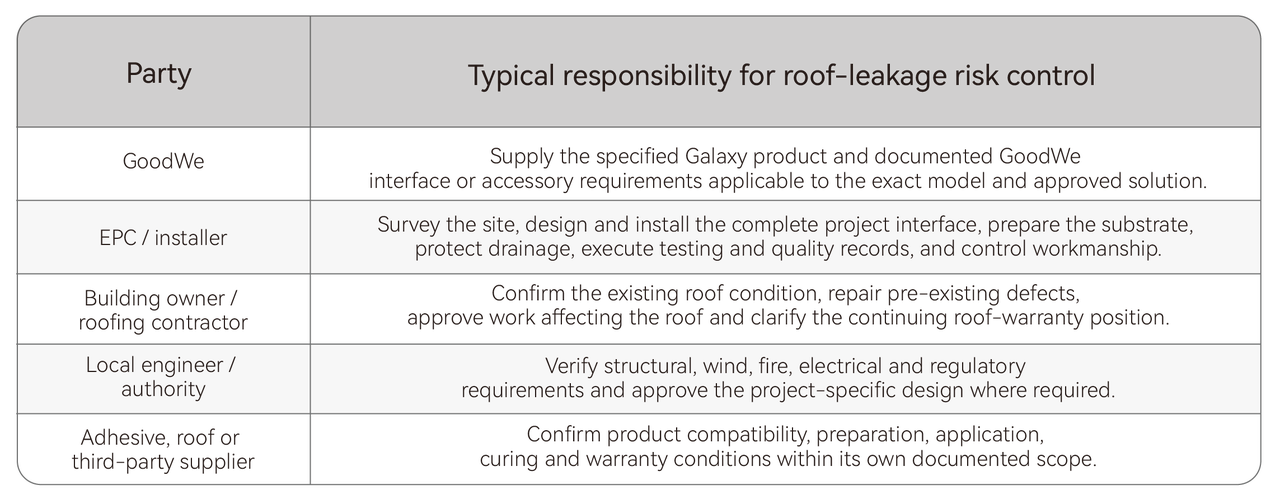
The contractual warranty and responsibility wording for each project should follow the current approved documents. In particular, responsibility for the bond between an adhesive or support and the existing roof cannot be assumed from the Galaxy module warranty alone.
Why Do Fewer Roof Penetrations Mean a Stronger Risk-Control Process?
Galaxy can help Southeast Asian EPCs reduce roof-leakage risk by avoiding new roof penetrations in supported adhesive and clamp applications. The value is straightforward: fewer holes mean fewer new waterproofing details that must remain sealed over time.
The strongest project outcome, however, comes from more than the mounting concept. It requires a sound roof, exact model and interface selection, preserved drainage, site-specific structural and adhesion verification, controlled installation conditions, traceable quality records and planned inspection after commissioning and severe weather.
For EPCs, the best way to use Galaxy is to treat the roof and the solar array as one coordinated system from the first survey through the full operating life.
*Technical note: This article is educational and does not replace the current Galaxy datasheet, installation manual, project drawings, adhesive or clamp manufacturer instructions, roof-supplier approval, local codes or qualified professional review. Product availability and supported installation methods vary by model and market. Final design, testing, construction and warranty positions must be confirmed for the specific project.
Related News
-

![Galaxy 570.png]()
Blogs
Galaxy Framed Version Uncovered: Technical Insights into High-Power, Full-Screen ModulesFebruary 2026
-
![img_v3_02li_477a94b7-cff3-4f42-adbd-242341957b0g.jpg]()
Blogs
GoodWe Galaxy Series -- An Innovative Solution for Green Energy Transition in Cold Chain VehiclesJune 2025
-
![eac47e209dda7ffe1dceb7ee5428b01.png]()
Blogs
Galaxy Series: Solving Golf Course Rooftop Challenges in JapanMarch 2025
-
![new1.jpg]()
News
GoodWe's Galaxy Panels Installed in Gold Coast: Non-Penetration, Leak-Free Solar Solutions for Concrete RoofsJuly 2024
-
![20250218-140043.jpg]()
News
GoodWe PVBM Solutions Achieves New Milestones with Two Prestigious Certifications for Galaxy and Polaris Solar PanelsJune 2024
-
![调整-1.jpg]()
News
GoodWe Launched Galaxy Series - Its Brand New Ultra-Lightweight PVBM ProductMarch 2023